


Topo Mole Game is a brainteaser that evaluates your spatial reasoning https://topomole.eu.com/. Players often talk about a approach called the “X-Ray Queue.” This isn’t a medical device. It’s a way to methodically assess the game board’s hidden layout. This article explains that X-Ray Queue process. We’ll explain how it works, where you employ it, and why it’s become an crucial tactic for players who want to move past guessing.
What Defines the X-Ray Queue in Topo Mole Game?
Imagine the X-Ray Queue as a methodical check-up for your puzzle. Just as an X-ray shows what’s under the surface, this method enables you to identify possible mole locations and tunnel links that aren’t evident at first glance. It’s a mental framework for ordering your next moves, converting random clicks into a logical chain of thought. Excelling at this procedure often differentiates casual players from the experts.
The queue works on a simple idea: every clue you find restricts what can happen nearby. Your job is to track these limits and deal with them in a smart order. By working through this priority list, you rule out dead ends and focus on the most likely spots for tunnels and moles. The puzzle shifts from a mystery into a series of logical steps you can resolve.
Step-by-Step Running of the X-Ray Queue
Running the X-Ray Queue requires following a clear cycle: scan, analyze, and verify. Participants condition themselves to keep this pattern and prevent clicking squares without a purpose. The process takes the inherent tactics of expert players and turns them into a technique you can master.
- First Board Scan:
- Queue Population:
- Task Processing:
- Board and Queue Update:
- Repeating Loop:
The Fundamental Ideas of the Diagnostic Procedure
This diagnostic method is based on several core concepts. A key one is the adjacency rule, which controls how moles and tunnels relate to the numbered clues on the board. Another is the concept of exclusion; after you confirm a cell is safe, you eliminate possibilities from its surrounding areas. The third principle is sequential dependence. What you find in one step directly shapes what you need to look at next on your list.
Adhering to these principles ensures your diagnosis stays on track. As an example, a high-number clue in a tight corner generates an urgent task in your X-Ray Queue, as it heavily restricts the possible positions for moles. On the other hand, an isolated clue with a small number may be deferred until you collect more data from the squares around it. Managing these priorities is central to the approach.
Finding Constraints
You start by spotting all the active limits on the board. Examine the number clues, the board boundaries, and any tunnel segments you have already found. Every one is a component of the overall picture, indicating where tunnels are forbidden and where they must go.
Creating a Probability Map
Then, you construct a mental map of likelihoods. You order spaces by the likelihood they contain a segment of a mole tunnel. This map is dynamic. It changes every time you process an item in your X-Ray Queue, getting more precise until some cells are confirmed.
Perks of Mastering This Diagnostic Approach
Mastering the X-Ray Queue goes beyond improving your wins games. It develops a organized way of analysis that you can transfer to different logic problems. Gamers experience the game more satisfying and less frustrating, because each step forward results from their own expertise, not luck.
- Better Consistency:
- Faster Speed:
- Greater Engagement:
Advanced Techniques Integrated into the Queue
Experienced players fold more complex techniques into the basic X-Ray Queue. These are not distinct strategies. They are dedicated routines that slot into your diagnostic list when the board calls for them. They assist tackle tougher puzzles without squandering time.
One is “edge logic,” a close study of how tunnels can run along the board’s border. When your queue brings you to an edge, this routine engages, offering deductions that transcend the standard rules. Another is “closed region analysis.” It examines if an isolated block of squares could even support a valid tunnel setup considering the clues around it.
Pattern-Based Deduction
Some number patterns feature only one possible solution. A line of ‘2’ clues in a row, for instance, mandates a specific tunnel shape. Spotting these patterns lets your diagnostic queue omit several small steps and enter confirmed information right away.
Conjecture Testing
For those uncommon, truly ambiguous spots, the queue might include a bit of hypothesis testing. You temporarily presume a state for one tricky square, then execute the diagnostic queue forward. If you hit a logical contradiction, your assumption was wrong, so the opposite must be true. You then refresh your queue with this proven fact.

Common Diagnostic Problems and Resolutions
Even with a solid procedure, you’ll run into usual snags. One is the “fork in the tunnel,” where a path could go two similarly likely ways. Another is the “low-information zone,” where clues are few and far between. The X-Ray Queue gives you a method for these obstacles so you don’t have to assume.
- Fork Resolution:
- Information Scarcity:
- Queue Overflow:
Common Questions on the X-Ray Queue Method
Is the X-Ray Queue a formal game feature?
Can beginners use this procedure effectively?
Does this procedure guarantee a win every time?
How does this differ from simple pattern memorization?
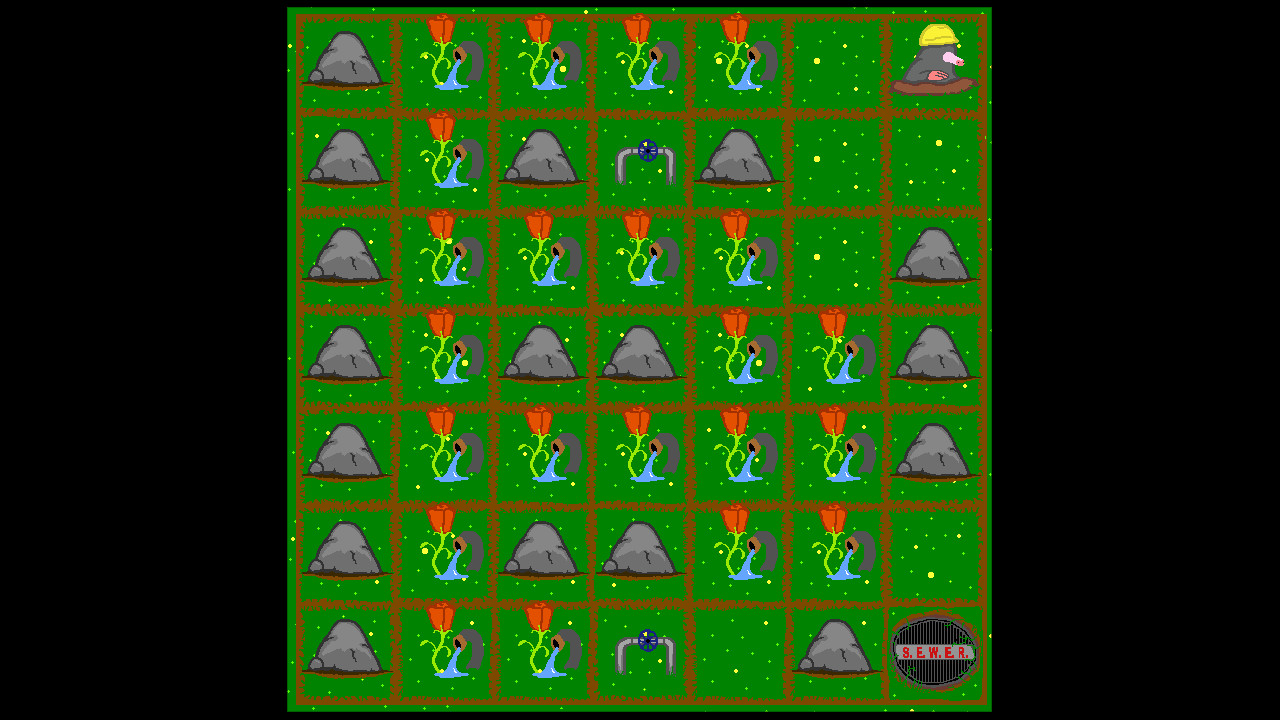
The X-Ray Queue diagnostic procedure turns Topo Mole Game into a series of logical problems to solve in order. By managing the puzzle with this priority list, players swap trial-and-error for careful analysis. This approach boosts your results and makes the game itself more satisfying. It shows that a well-made logic puzzle can offer real strategic depth.